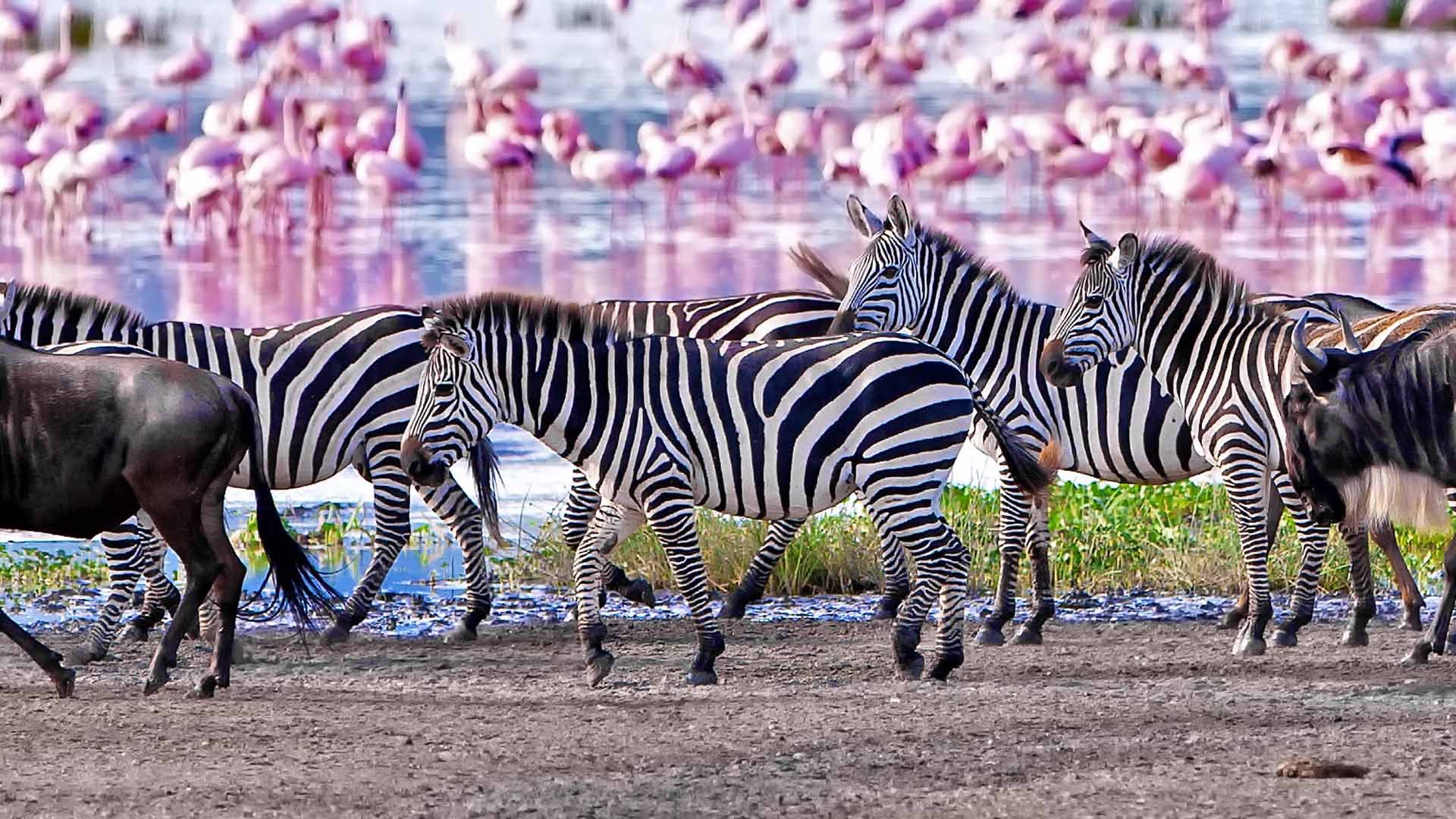
Lake Manyara National Park is one of Tanzania's most distinctive safari destinations — a compact but remarkably diverse park that packs an extraordinary range of ecosystems into just 330 square kilometers. Located along the base of the dramatic Rift Valley escarpment in the Arusha and Manyara regions, the park derives its name from the Maasai word emanyara, referring to the spiky protective enclosure around a family homestead, or boma. The shallow alkaline lake itself — the seventh-largest in Tanzania at approximately 470 square kilometers — is part of the Natron-Manyara-Balangida branch of the East African Rift and was designated a UNESCO Biosphere Reserve under the Man and the Biosphere Programme.
What makes Lake Manyara truly special is the sheer diversity of habitats compressed into such a small area. In a single day's game drive, you can pass through a dense groundwater forest of towering mahogany and fig trees, emerge into open acacia woodlands dotted with grazing animals, and arrive at the shores of a shimmering soda lake filled with flamingos. This variety of landscapes supports an equally diverse range of wildlife — from the park's famous tree-climbing lions to large elephant herds, troops of olive baboons and Sykes monkeys, Cape clawless otters in the rivers, and over 400 species of birds including both Greater and Lesser flamingos, Yellow-billed Stork, Great White Pelican, and numerous migratory waders.
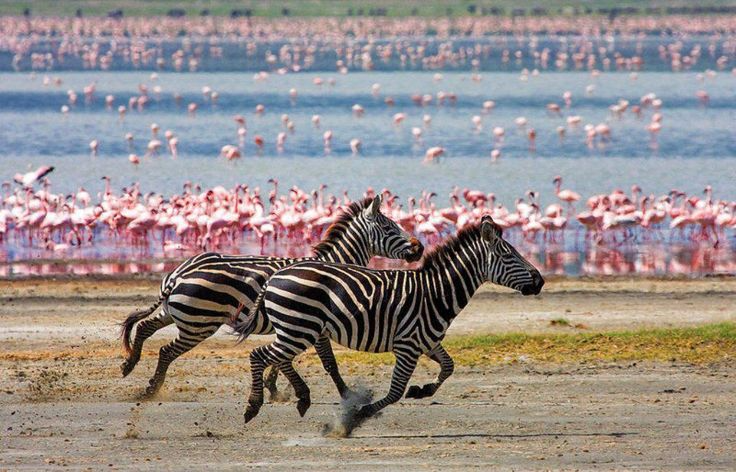
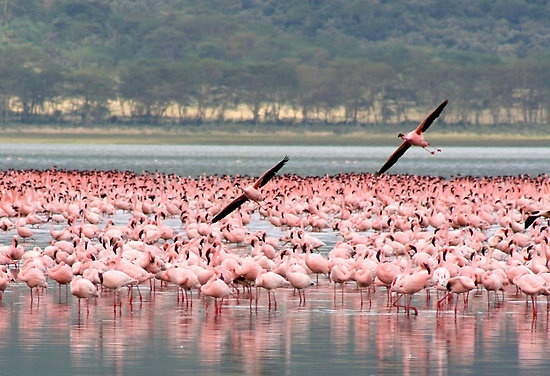
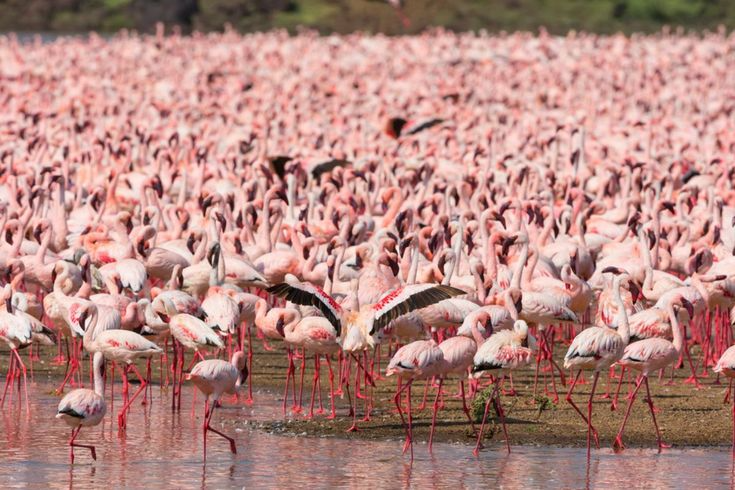
Lake Manyara — a shallow alkaline Rift Valley soda lake that transforms into a sea of pink when vast flocks of flamingos gather along its shores.
What Is Lake Manyara Famous For?
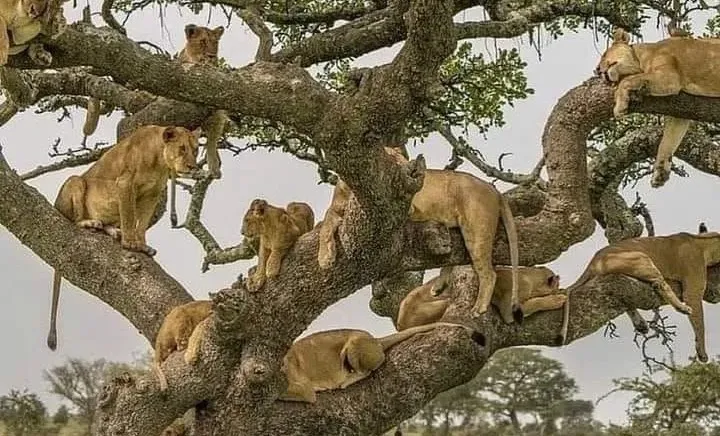
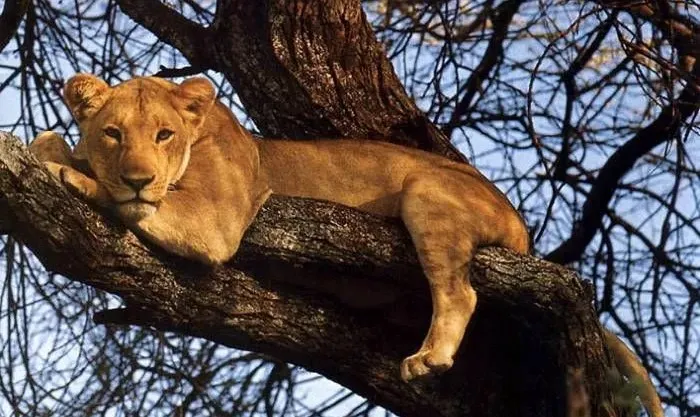
Lake Manyara is famous for two things above all else: its tree-climbing lions and its flamingos. The tree-climbing lions of Lake Manyara are among the park's most sought-after sightings. Unlike lions elsewhere that occasionally climb trees, Manyara's lions have developed a distinctive behavioral pattern of spending significant time resting on the branches of acacia trees — a behavior thought to be a strategy to escape biting tsetse flies and the heat of the plains. These lions have been documented in the park for decades and remain one of the park's defining wildlife encounters.
The lake itself is an alkaline or soda lake, meaning it has high concentrations of dissolved salts and brackish water. This creates extensive alkaline flats and mud flats that support vast populations of algae and microorganisms — the food source for the enormous flocks of flamingos that gather along the lake shores. During peak season, the sight of thousands of flamingos feeding in the shallows, with the Rift Valley escarpment rising dramatically behind them, is one of East Africa's most photogenic wildlife spectacles. The lake is recognized as an Important Bird Area, supporting not only flamingos but also Northern Shoveler, Black-winged stilt, Pied Avocet, Chestnut-banded Plover, Caspian Plover, Ruff, Little Stint, Marsh Sandpiper, and numerous other waterfowl and migrants.
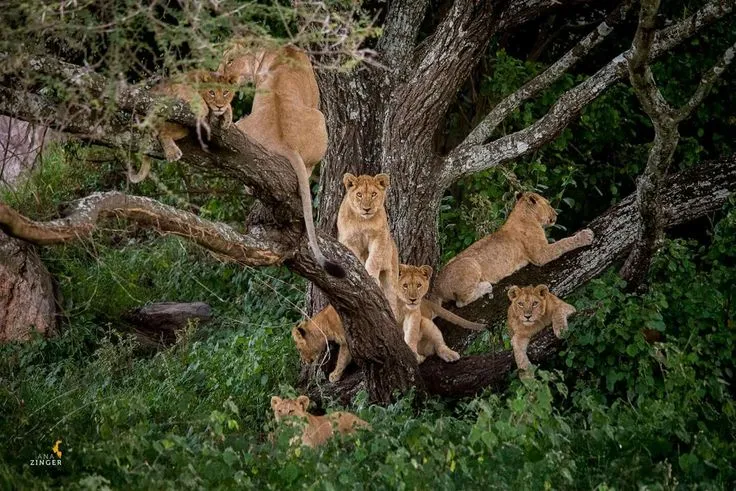
The groundwater forest of Lake Manyara — a lush, shaded habitat of towering mahogany trees.
Wildlife and Birding
Beyond the tree-climbing lions and flamingos, Lake Manyara supports an impressive diversity of wildlife. Large elephant herds move through the forest and woodlands, often coming remarkably close to vehicles. Buffalo, Masai giraffe, impala, zebra, wildebeest, and hippo are all common. Predators include not only lions but also leopard, cheetah, and spotted hyena. The groundwater forest is home to troops of olive baboons — some of the largest troops in Africa — as well as Sykes monkeys and the nocturnal short-eared galago. Cape clawless otters can sometimes be spotted in the rivers and streams, and Egyptian mongoose are frequently seen darting across the roads.
For birders, Lake Manyara is one of Tanzania's premier destinations. Over 400 species have been recorded, from the iconic flamingos to raptors, hornbills, kingfishers, and numerous Palearctic migrants during the green season. The park's position at the base of the Rift Valley escarpment creates a variety of microclimates that support species rarely seen elsewhere on the Northern Circuit. The endemic Oreochromis amphimelas, a cichlid fish found only in closed basins in Tanzania, inhabits the lake's inflow areas where salt concentrations are lower.
How Does Lake Manyara Compare to Other Parks?
The difference between Lake Manyara and Ngorongoro is instructive for safari planning. Ngorongoro is a volcanic caldera with a contained ecosystem where the Big Five can often be seen in a single day on the crater floor. Lake Manyara offers no such geological drama, but it provides a more intimate, varied experience across its groundwater forest, acacia woodlands, and lake shore. Manyara's tree-climbing lions are a unique attraction that Ngorongoro simply cannot offer, and the birding — particularly for waterfowl and flamingos — is far superior at Manyara.
Is Lake Manyara worth visiting? For wildlife enthusiasts, the answer is a definite yes. While it is one of Tanzania's smaller parks (the lake itself occupies approximately 230 of the park's 330 square kilometers), the concentration of diverse habitats and species in such a compact area makes it an exceptionally rewarding destination. It is also an ideal first or last stop on a Northern Circuit itinerary — located just a short drive from Arusha and easily combined with Ngorongoro Crater. Our 6-day Tanzania safari and 7-day Tanzania safari both include Lake Manyara alongside Tarangire, Serengeti, and Ngorongoro for a complete circuit experience.
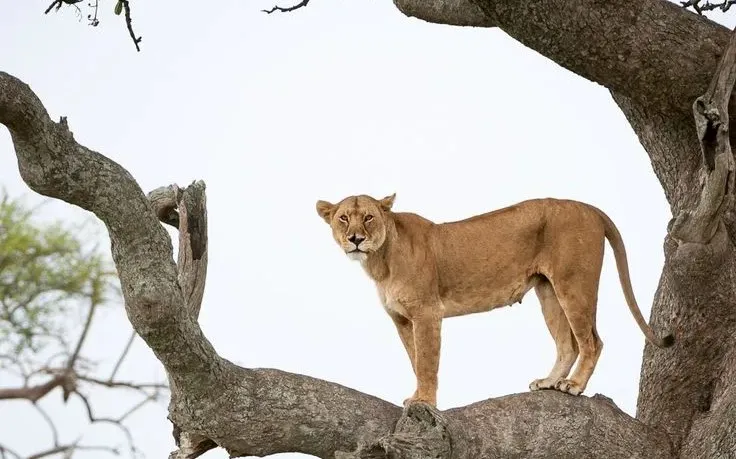
Lake Manyara's tree-climbing lions — a distinctive behavioral adaptation unique among East Africa's lion populations, regularly observed resting on acacia branches.
Activities and Experiences
Game drives are the primary activity in Lake Manyara, following a network of roads that traverse the park's diverse habitats — from the dense groundwater forest through acacia woodlands and out to the lake shore. The loop trail from the entrance gate offers a well-designed circuit that covers all major habitat zones. Beyond game drives, the park offers several distinctive experiences. Canoe trips on the lake, when water levels permit, provide a unique perspective on the flamingos and waterfowl. The Cultural Tourism Programme in nearby Mto wa Mbu village offers insights into local life, traditional fishing methods, and the Iraqw people who inhabit the Monduli District.
Bicycle trips along the east shore of the lake and walking safaris in select areas provide additional ways to experience the park. The Maji Moto hot springs, located within the park, are a geological curiosity well worth visiting. For those seeking a premium experience, Lake Manyara Tree Lodge offers a treehouse sanctuary experience set among towering mahogany trees — one of the most unique accommodation experiences on the Northern Circuit. Our 8-day Northern Circuit safari includes Lake Manyara with carefully selected accommodation and a full range of activities.
Hydrology and the Lake Ecosystem
Lake Manyara is a closed basin — an endorheic lake with no outflow — where water loss occurs almost entirely through evaporation. The lake is fed by underground springs, rainwater-fed rivers, and both permanent and ephemeral rivers flowing from the Ngorongoro highlands to the west. During the wet season, the lake's surface area expands dramatically; during the dry season, it contracts, leaving extensive alkaline flats and mud flats around its edges. The maximum depth has been measured at approximately 3.7 meters through bathymetry surveys, making it a shallow body of water.
The lake's catchment area extends across the Rift Valley escarpment, encompassing forests, savannas, and agricultural land around Mto wa Mbu where irrigation agriculture and rain-fed farming support local communities. The surrounding area includes game reserves, forest reserves, wildlife management areas, and conservation areas that together form part of the broader Manyara hydrological basin. However, the lake faces significant environmental challenges including unsustainable land use, unsustainable water use, sedimentation rates, soil erosion, land cover changes, and rainfall fluctuations — all of which threaten the long-term health of this vital ecosystem and its designation as a UNESCO Biosphere Reserve.
Plan your Lake Manyara safari with confidence. Our team will design a completely bespoke itinerary tailored to your travel dates, budget, and wildlife interests. Every safari is 100% private with expert naturalist guides. Lake Manyara is the perfect first or last stop on your Northern Circuit adventure.