Mount Kilimanjaro is not merely Africa's highest mountain — it is the tallest free-standing mountain on Earth, a dormant volcanic massif rising 5,895 meters above the Tanzanian plains in solitary majesty. Visible from hundreds of kilometers away, its snow-capped summit has drawn explorers, adventurers, and dreamers for over a century. Unlike the technical peaks of the Himalayas or the Andes, Kilimanjaro is a high-altitude trek — no ropes, no crampons, no climbing experience required. What it demands is determination, physical fitness, and the humility to move slowly enough for your body to adapt to the thinning air.
The mountain comprises three volcanic cones: Shira, the oldest and most eroded at 3,962 meters; Mawenzi, a jagged peak at 5,149 meters; and Kibo, the highest and youngest, whose Uhuru Peak at 5,895 meters is the ultimate goal of every Kilimanjaro climb. The mountain and its surrounding national park — Mount Kilimanjaro National Park — were designated a UNESCO World Heritage Site in 1987. The Chagga people, who have inhabited the mountain's lower slopes for centuries, cultivated the rich volcanic soil and developed agricultural systems that remain integral to the region's identity. Today, Kilimanjaro draws over 30,000 climbers annually, each seeking the profound experience of standing above the clouds at sunrise on the highest point in Africa.
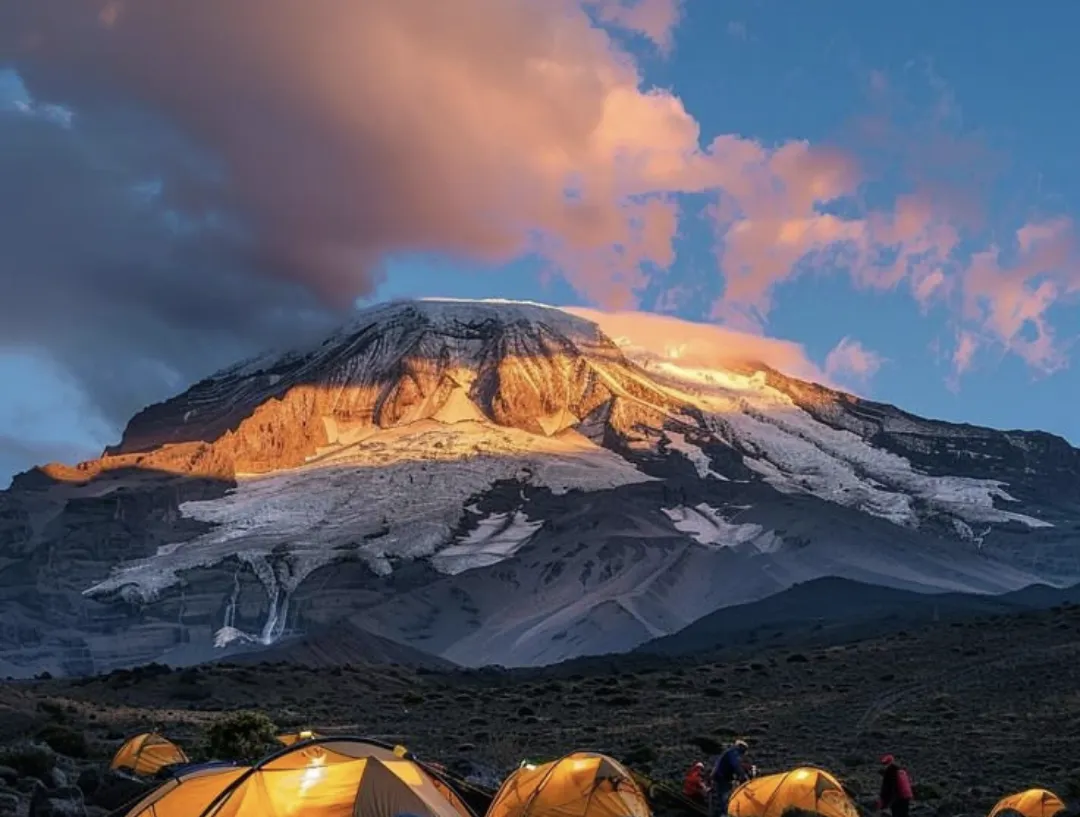
The summit of Mount Kilimanjaro at sunrise — climbers reach Uhuru Peak (5,895m) after a midnight ascent from high camp, arriving as the first light breaks over Africa.
Why Is Mount Kilimanjaro So Famous?
Kilimanjaro occupies a unique place in the global imagination. It is one of the Seven Summits — the highest mountains on each continent — yet it is the most accessible of them all. It requires no technical mountaineering skills, making it attainable for ordinary fit people with proper preparation. Its location near the equator, combined with its immense height, means that a climber passes through nearly every climate zone on Earth: from tropical rainforest at the base through moorland and alpine desert to an arctic summit. The mountain's glaciers and snowfields — though rapidly shrinking due to climate change, with ice loss documented since 1912 — remain a surreal sight just 3 degrees south of the equator.
The cultural significance of Kilimanjaro extends beyond climbing. The mountain is deeply woven into Tanzanian identity, featuring in the national consciousness and serving as a powerful economic engine through tourism. Kilimanjaro International Airport, located between Arusha and Moshi, is the primary gateway for visitors to Tanzania's northern safari circuit. The mountain's weather and climate patterns influence agriculture across the region, and its forests are critical water catchments. For the Chagga people who farm its lower slopes, Kilimanjaro is both ancestral home and spiritual presence — a mountain that gives life as surely as it challenges those who attempt its summit.
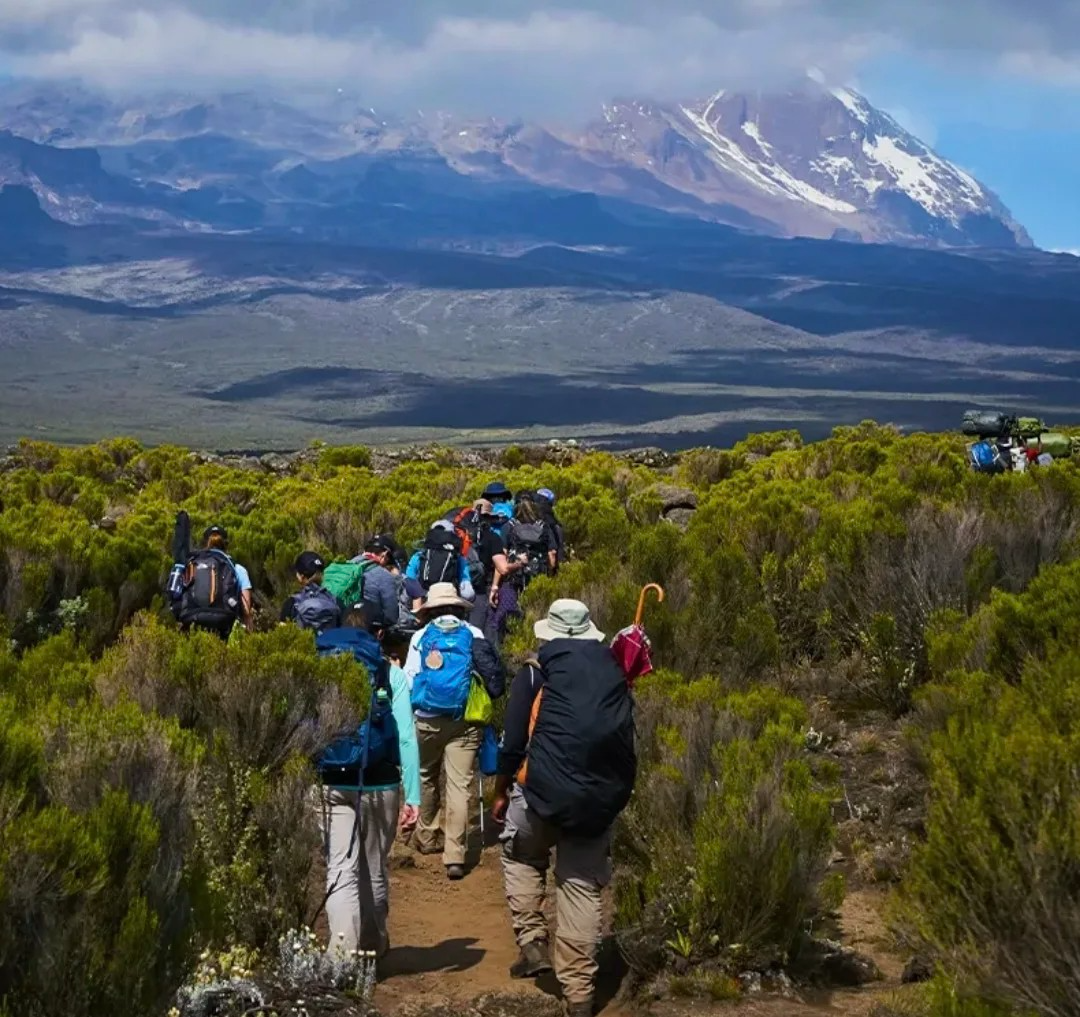
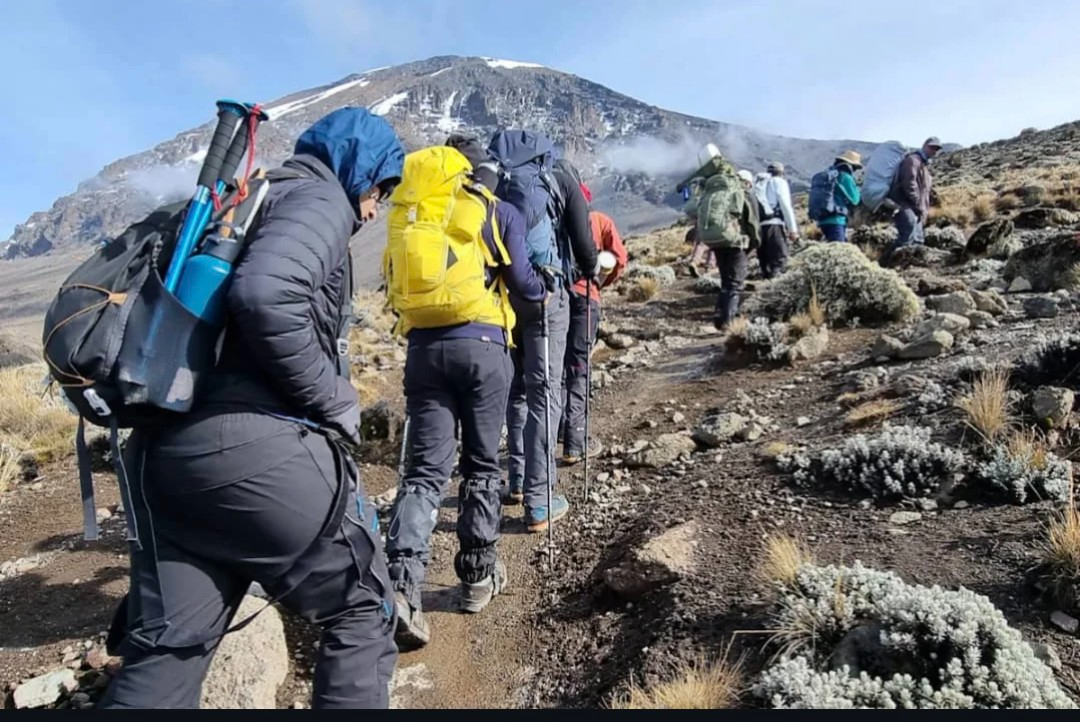
Trekking through the moorland zone of Kilimanjaro — climbers pass through five distinct ecosystem zones from forest to alpine desert to summit glaciers.
Can a Beginner Climb Kilimanjaro?
This is the question every first-time climber asks, and the answer is a qualified yes. Kilimanjaro is not a technical climb — there are no vertical rock faces, no ice axes, no ropes. It is a high-altitude trek, and the primary challenge is not the terrain but the altitude. The summit success rate across all routes and operators averages between 60% and 70%, but this figure masks enormous variation based on route choice, duration, and operator quality. Climbers who choose longer routes with more acclimatization days have dramatically higher success rates — often exceeding 85% on 7-8 day itineraries compared to under 50% on rushed 5-day attempts.
Altitude sickness is the single greatest obstacle on Kilimanjaro. It does not discriminate by fitness level — elite athletes can succumb while modestly fit hikers cruise to the summit. The key variables are acclimatization (giving your body time to adapt), hydration, pace (pole pole — slowly slowly in Swahili), and the quality of your guide team. Tanzania Bespoke Expeditions employs guides with an average of over 10 years of Kilimanjaro experience who are trained to recognize early symptoms of altitude sickness and make decisions that prioritize safety over summit success. Our 8-day Lemosho Route climb is specifically designed for maximum acclimatization and summit success rates exceeding 90%.
Kilimanjaro Routes Comparison
Kilimanjaro offers seven main routes to the summit, each with distinct characteristics. The Machame Route — often called the "Whiskey Route" — is the most popular, offering excellent scenery and a good acclimatization profile over 6-7 days. Our 7-day Machame Route climb provides the ideal balance of acclimatization time and value. The Lemosho Route is widely considered the most beautiful, approaching from the remote western side of the mountain and traversing the Shira Plateau before joining the Machame path. The 7-day Lemosho Route offers panoramic views and quieter trails.
The Marangu Route — the "Coca-Cola Route" — is the only path with mountain hut accommodation rather than tents, making it popular but often crowded. The Rongai Route approaches from the north near the Kenyan border and is the best choice during the rainy season. The Umbwe Route is the steepest and most challenging, suitable only for experienced trekkers. The Northern Circuit is the longest and newest route, offering the most complete circumnavigation of the mountain over 9 days — and the highest summit success rates of any route.
Training and Preparation
Preparing for Kilimanjaro should begin at least 3-4 months before your departure. The focus should be on cardiovascular endurance — long hikes, stair climbing with a loaded pack, running, cycling, and swimming. Aim to comfortably hike 6-8 hours on consecutive days. Strength training for legs and core helps with stability on uneven terrain. Mental preparation is equally important — summit night is long, cold, and psychologically demanding, typically involving 6-8 hours of climbing in darkness followed by a 2-3 hour descent.
Gear is critical. Insulated waterproof hiking boots (broken in before the climb), layered clothing (base layers, fleece, insulated jacket, waterproof shell), warm hat and gloves, a sleeping bag rated to -10 degrees Celsius, trekking poles, headlamp, sunglasses, sunscreen, and a 30-40 liter daypack are all essential. Quality high-altitude tents and equipment are provided by your operator — do not compromise here. Tanzania Bespoke Expeditions provides premium mountain hardwear equipment including four-season tents rated for extreme conditions.
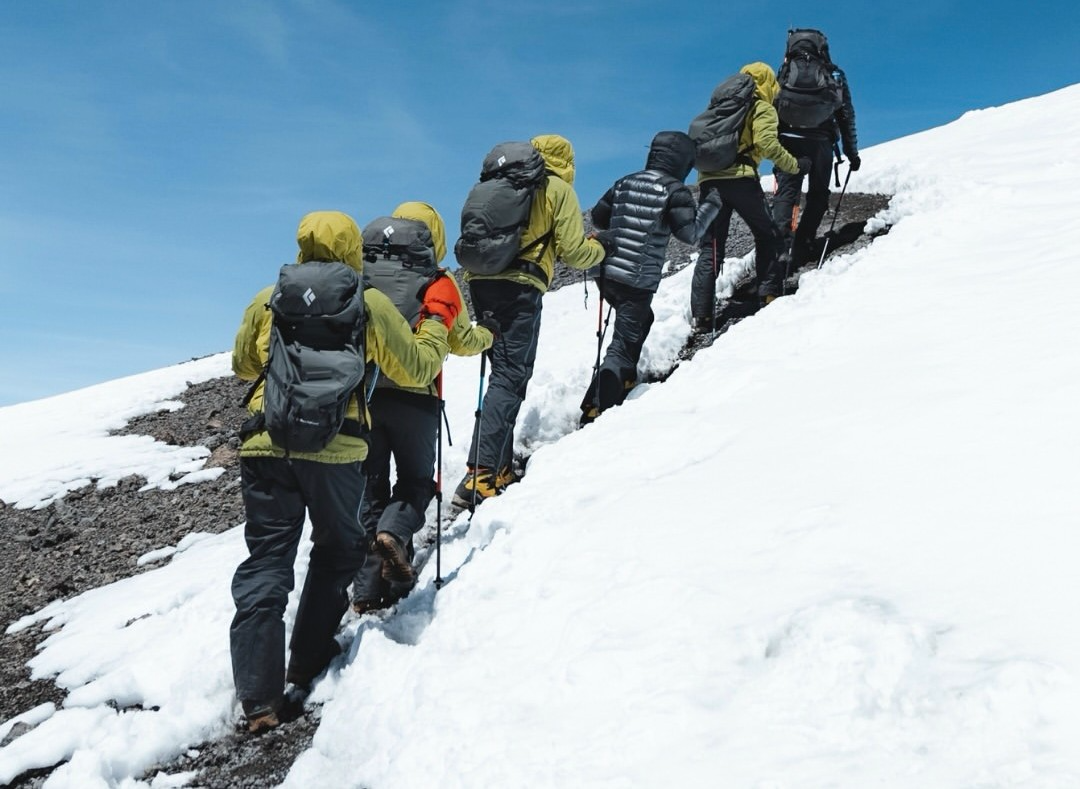
The glaciers of Kilimanjaro — scientists estimate the mountain has lost over 80% of its ice cover since 1912 due to climate change. Seeing these equatorial glaciers is one of the most profound experiences of the climb.
Best Time to Climb and Kilimanjaro Weather
The best months to climb Kilimanjaro are January through March and June through October. These periods offer the most stable weather, clearer skies, and better trail conditions. January and February are typically colder but clearer, with a higher chance of snow on the summit. August and September are warmer but can be cloudier. The long rains (April-May) and short rains (November) make trails slippery and views limited — these months are best avoided unless you specifically prefer fewer crowds and are prepared for wet conditions.
Kilimanjaro creates its own weather patterns. The mountain is so large it forces moist air upward, creating cloud and precipitation on its slopes while the surrounding plains remain dry. Temperatures vary dramatically — from 25-30 degrees Celsius at the base to minus 15-25 degrees Celsius on the summit. The ultraviolet radiation at altitude is intense, and sun protection is essential even on cloudy days. The dry, thin air causes rapid dehydration, and climbers must drink 3-4 liters of water daily.
Wildlife on Kilimanjaro
While climbers do not come to Kilimanjaro primarily for wildlife, Mount Kilimanjaro National Park supports a surprising diversity of animals, particularly in the lower forest zone. Cape buffalo, African elephants, blue monkeys, and black-and-white colobus monkeys inhabit the mountain's forest habitats. Leopards are present but rarely seen. As you ascend through the moorland zone, wildlife becomes scarcer, though you may spot the occasional eland or duiker. Above 4,000 meters in the alpine desert zone, only the hardiest species survive — primarily ravens and occasional small rodents. The mountain's unique ecosystem zones, from forest to alpine desert, are protected within the national park boundaries and contribute to the extraordinary experience of climbing through multiple worlds in a single journey.
Plan your Kilimanjaro climb with confidence. Our team will design a tailor-made trekking package based on your fitness level, preferred route, and available time. Every climb includes experienced guides, porters, quality equipment, and comprehensive acclimatization protocols. Summit night is the hardest thing most people ever do — and the most rewarding.